Joint submission from the History Councils of Australia to influence revised National Cultural Policy
The History Councils of Australia have submitted a joint submission to the Australian Federal Government to help shape the next National Cultural Policy, the successor to ‘Revive: A place for every story, a story for every place’, which has guided arts and cultural policy since 2023. The joint statement comes from the History Council of Victoria, The History Council of South Australia, The History Council of Western Australia, and the History Council of New South Wales, peak bodies for history representing collecting and heritage bodies, history teachers, academic and professional historians, and local, Indigenous, and specialist history organisations.
The full statement is as follows:
The four state History Councils (New South Wales, South Australia, Victoria and Western Australia) welcome this opportunity to make a submission to the review of Australia’s National Cultural Policy.
The History Councils are the peak bodies for history in our states and comprise representatives from collecting and heritage bodies; history teachers; academic and professional historians; and local, Indigenous, and specialist history organisations. Our objectives are to further historical literacy and historical understanding of the world today. We each endorse the national ‘Value of History Statement’, which may be consulted for example at: https://www.historycouncilvic.org.au/value_of_history
We are committed to the value of historical literacy for the capacity it gives us for understanding people separate from us in time, place and culture, and therefore for understanding our own times better, and encouraging historical knowledge about all societies.
We endorse the importance of Revive as a statement of a distinctively Australian cultural policy. In particular, we recognise the strength of the sections on ‘First Nations First’ and ‘Strong Cultural Infrastructure’, which highlights the importance of the collecting institutions that are the backbone of the work of historians (p. 76).
However, while Revive correctly stresses the centrality of history in First Nations’ creative work, it subsequently makes only passing reference to the place of history-making as a creative endeavour. On p. 11 it notes that culture includes ‘the history of our wars and conflicts, our arguments, and accords. It is the story of our comings and goings, our migrations’ (p. 11). The document also highlights the ‘stories and creative content which showcase Australian talent, engage with Australian history and represent contemporary Australia …’ (p. 80). What is missing is the sense that history-making is an essential cultural practice.
The contribution of historians to cultural life is evidenced by the breadth and quality of their writing and their contribution to our broader culture through a wide range of media. There are more than 1200 local historical societies in Australia, with approximately 100,000 members. In the words of their peak body, the Federation of Australian Historical Societies, ‘members provide hundreds of thousands of hours of work to collect documents and images, research and publish history, present public lectures and exhibitions, protect and preserve built and place heritage, collect material objects and exhibit them in museums, and make an invaluable contribution to heritage tourism.’ The History Councils making this submission are also actively involved in enriching the creative life of the nation.
In our view, knowledge of Australian and other histories is central to a vigorous democratic culture and social cohesion, which relies upon a critical and inclusive understanding of the past. Historical literacy emphasises cultural understanding, holistic explanations, careful judgement, and flexibility of outlook. Writing and talking about history, within schools and universities and across the wider community, produces the narratives we need to understand and advance our society.
Our recommendation is that Revive be refined with a more explicit recognition that history-making, through research, writing, performance and dissemination, is a core component of Australian cultural policy.
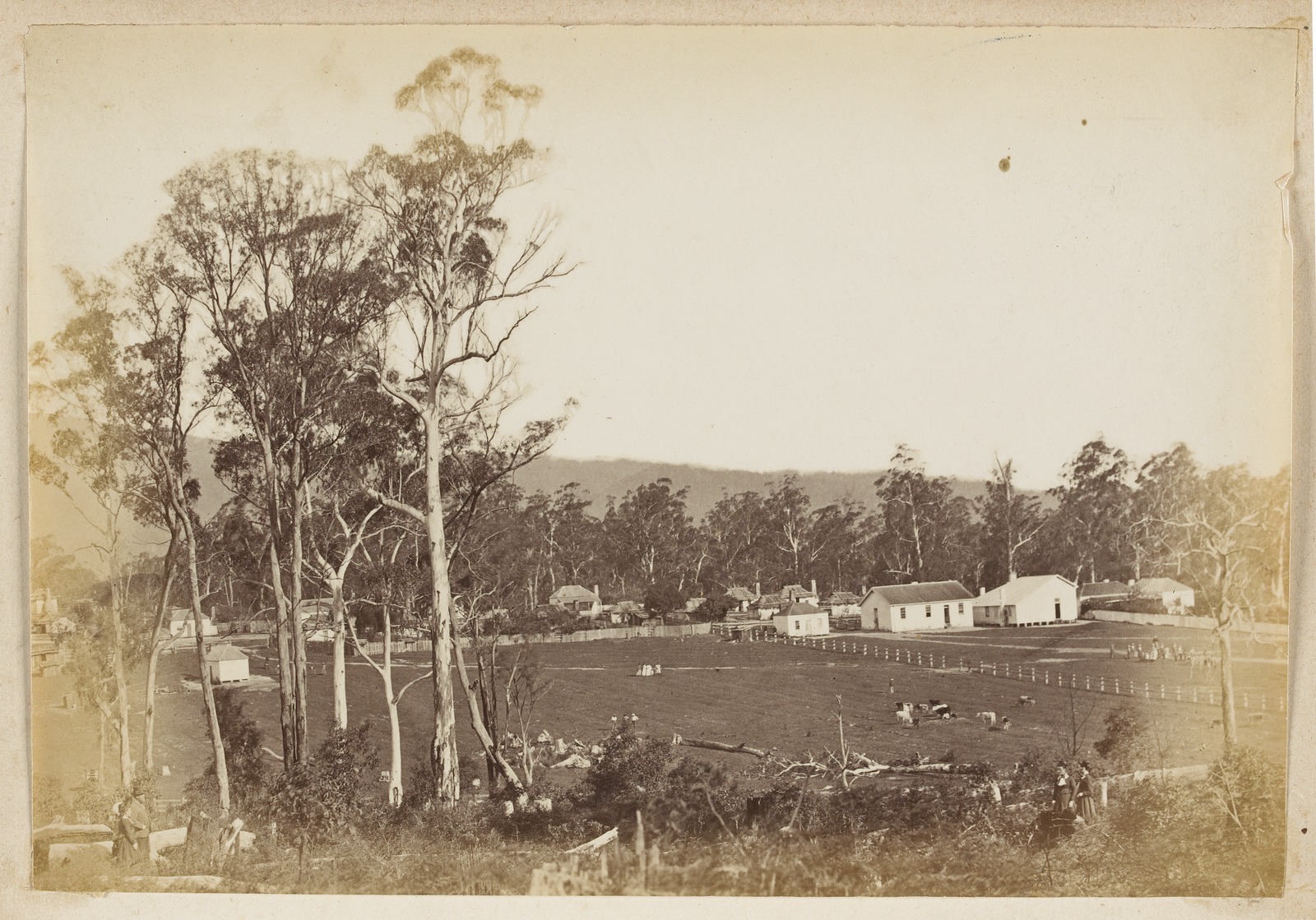
Photo: The Aboriginal Mission Station, Coranderrk, by Fred Kruger, ca. 1880-1881. Courtesty of State Library of Victoria.